

Do you ever feel like you’re working twice as hard as everyone else just to keep up? The constant cycle of missed deadlines, forgotten appointments, and feeling misunderstood can be exhausting and deeply isolating. If you’ve wondered whether these lifelong struggles could be ADHD, the thought of seeking a formal ADHD diagnosis can feel overwhelming-a path clouded by fears of being dismissed and uncertainty about where to even begin. We hear you, and we want you to know you are not alone on this journey.
This guide was created to be your compassionate companion, gently lighting the way forward. We will walk you through every step of the diagnostic process, from preparing for your first appointment to understanding your results and finding the right support. Our goal is to replace your anxiety with a sense of empowerment and provide the clear, reassuring roadmap you need to finally find answers. Your path to clarity and renewed hope starts right here.
Recognizing the Signs: Is It Time to Seek an ADHD Diagnosis?
If you’re wondering whether your daily struggles could be more than just stress or a busy life, you are not alone. The common image of a hyperactive child doesn’t capture the complex reality of Adult attention deficit hyperactivity disorder. In adulthood, the condition often manifests as a persistent challenge with executive functions-the mental skills that help you manage time, organize tasks, and regulate emotions. While everyone experiences moments of distraction, ADHD involves a chronic pattern that significantly impacts your life.
Online self-assessments can be a helpful starting point for self-reflection, but they are not a substitute for a comprehensive, professional evaluation. Understanding the specific signs is the first step on the path to clarity and support.
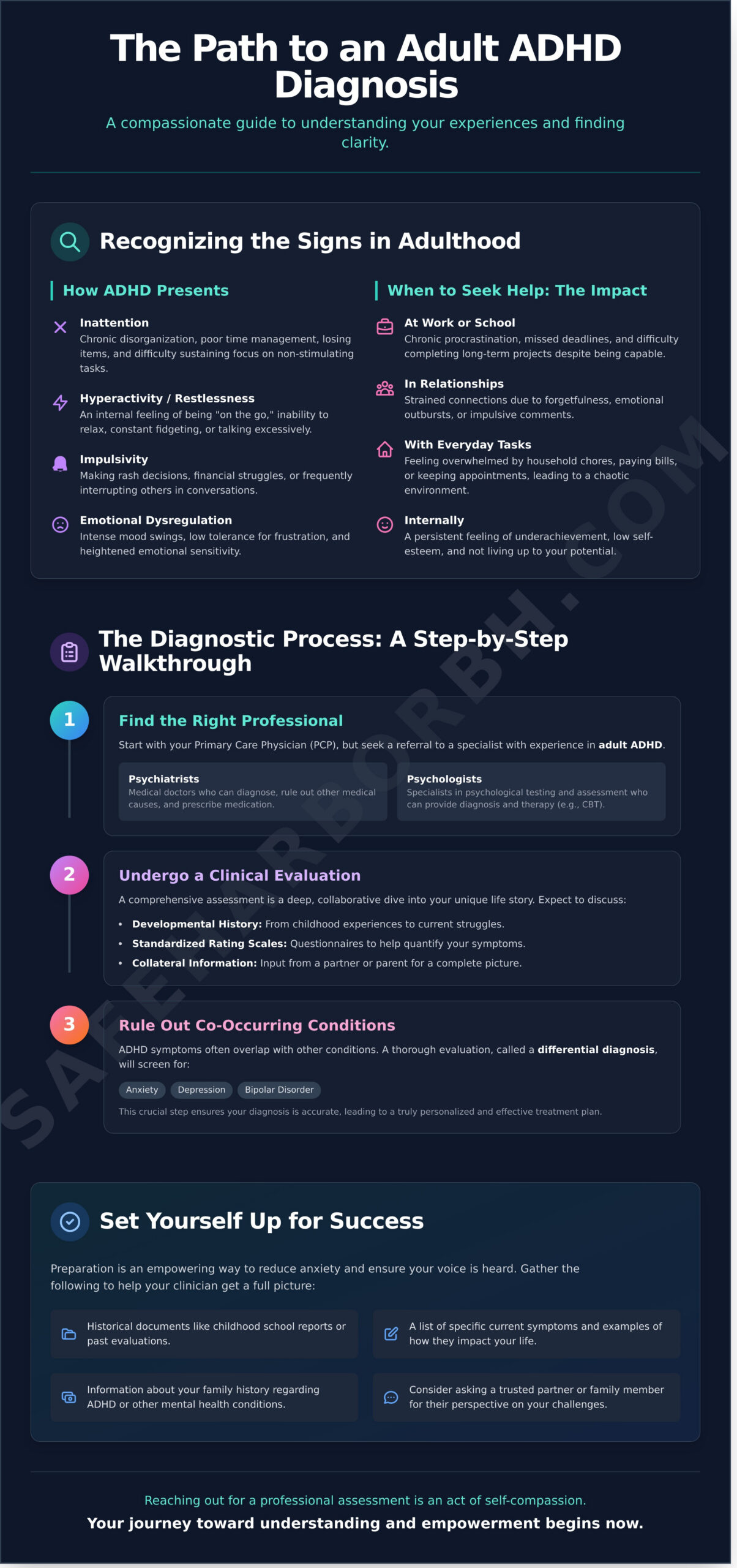
How ADHD Presents in Adulthood
In adults, symptoms often look less like outward hyperactivity and more like internal and functional difficulties. Key areas of challenge include:
- Inattention: This can appear as chronic disorganization, frequently losing items, poor time management, and difficulty sustaining focus on tasks that aren’t highly stimulating.
- Hyperactivity/Restlessness: Instead of running and climbing, adult hyperactivity often feels like an internal sense of restlessness, an inability to relax, constant fidgeting, or talking excessively.
- Impulsivity: This may lead to making rash decisions without considering the consequences, struggling with financial management, or frequently interrupting others in conversation.
- Emotional Dysregulation: Many adults with ADHD experience intense mood swings, a low tolerance for frustration, and heightened emotional sensitivity, making it hard to manage reactions.
The Impact on Daily Life: When to Take the Next Step
Recognizing these symptoms is one part of the picture. The decision to pursue an ADHD diagnosis often comes when you see how these patterns consistently affect your well-being and potential:
- At Work or School: You may struggle with chronic procrastination, consistently miss deadlines, or find it difficult to complete long-term projects despite knowing you are capable.
- In Relationships: Challenges with forgetfulness (like missing important dates), emotional outbursts, or impulsive comments can strain connections with partners, family, and friends.
- With Everyday Tasks: You may feel constantly overwhelmed by managing household chores, paying bills on time, or keeping appointments, leading to a chaotic home environment.
- Internally: A persistent and painful feeling of underachievement, low self-esteem, or believing you are failing to live up to your potential is a common experience.
If these signs resonate deeply with your own life, it may be time to take the next step. Reaching out for a professional assessment is an act of self-compassion and the beginning of a journey toward understanding and empowerment.
The ADHD Diagnostic Process: A Step-by-Step Walkthrough
Taking the first step toward an adult ADHD diagnosis is a powerful act of self-care. While the path may seem complex, it is a structured and supportive journey designed to bring you clarity and guide you toward healing. A comprehensive evaluation is not just a quick quiz; it is a deep, collaborative dive into your life story to ensure you receive the most accurate understanding of your challenges and strengths.
Who Can Diagnose ADHD? Finding the Right Professional
Your journey begins with finding a qualified professional who can walk beside you. While your Primary Care Physician (PCP) is a great starting point, they will often refer you to a specialist for a formal evaluation. Key professionals include:
- Psychiatrists: Medical doctors who can diagnose ADHD, rule out other medical causes, and prescribe medication as part of a holistic treatment plan.
- Psychologists: Specialists trained in psychological testing and assessment who can provide a detailed diagnosis and offer therapeutic support like CBT.
We encourage you to seek a clinician who explicitly states they have experience with adult ADHD, as its presentation can differ significantly from childhood ADHD.
What to Expect During the Clinical Evaluation
A thorough assessment is a partnership between you and your provider. It involves open conversation and a review of your unique history. This comprehensive approach ensures every aspect of your experience is considered, aligning with best practices for the ADHD diagnostic process as outlined by leading institutions like the National Institute of Mental Health (NIMH). You can expect to discuss your developmental history, from childhood experiences and school performance to your current daily struggles. Standardized rating scales and questionnaires help quantify your symptoms, and sometimes a partner or parent may be asked to provide their perspective to create a complete picture.
Ruling Out Co-Occurring Conditions
The symptoms of ADHD-like difficulty with focus, emotional regulation, and restlessness-can often overlap with other mental health conditions. A compassionate provider will carefully screen for issues such as anxiety, depression, and bipolar disorder. This crucial step, known as differential diagnosis, is not meant to be overwhelming; it is designed to ensure your final ADHD diagnosis is accurate, paving the way for a truly personalized treatment plan that addresses all of your needs.
Preparing for Your ADHD Assessment: How to Set Yourself Up for Success
Taking the step to seek an evaluation can feel overwhelming, but preparing for your appointment is an empowering way to reduce anxiety and ensure your voice is heard. A little organization helps you communicate your experiences clearly, providing your clinician with the comprehensive picture they need for an accurate evaluation. This preparation is a crucial part of your journey toward understanding and healing.
Gathering Your History and Documents
Because an adult ADHD diagnosis requires evidence of symptoms that began in childhood, gathering historical information can be incredibly valuable. This provides a timeline of your challenges, helping your provider see long-standing patterns. Consider collecting:
- Old school report cards, especially those with teacher comments about focus, behavior, or completing work.
- Memories from parents or older relatives who can recall your childhood temperament, energy levels, and academic struggles.
- A brief personal timeline of major life events, noting when you felt your symptoms were most challenging.
Documenting Your Current Symptoms
While your history is important, your current struggles are the reason you are seeking help now. Keeping a simple journal for a week or two before your assessment provides concrete, real-life examples of how symptoms affect you. This practice of self-observation is a key part of preparing for your ADHD assessment, as it helps connect your daily challenges to diagnostic criteria. Be sure to:
- Note specific instances of forgetfulness, procrastination, disorganization, or impulsivity.
- Describe the impact these moments have on your work, relationships, home life, and emotional well-being.
Questions to Ask Your Healthcare Provider
Your assessment is a collaborative process. You have the right to feel informed and comfortable with the professional guiding you. Preparing a few questions beforehand ensures you leave with a clear understanding of the process and what comes next. We recommend asking:
- What is your experience in diagnosing ADHD in adults?
- What specific tools or tests do you use in your evaluation?
- What are the potential outcomes and next steps after the assessment?
- How do you approach treatment if a diagnosis is confirmed?
Remember, this preparation is not a test-it is a tool to help you advocate for yourself. By organizing your thoughts and history, you are taking a proactive step on your path to clarity and well-being. This journey is a partnership, and at Safe Harbor BH, we are here to support you every step of the way.
After the Diagnosis: Understanding Your Results and Next Steps
Receiving an adult ADHD diagnosis can feel like the final page of a long, confusing book. In reality, it’s the start of a new, more empowering chapter. The mix of emotions you may feel is completely normal-from the profound relief of finally having an answer to the grief for a past filled with misunderstood challenges. Your diagnostic report will provide clarity, explaining the clinical findings and specifying your unique ADHD presentation. This knowledge is not an endpoint; it is the foundation upon which you can build a more intentional and fulfilling life.
Navigating the Emotions of a Diagnosis
Allow yourself the space to process what this new information means. It’s common to experience a wide spectrum of feelings, and each one is valid. Many people feel:
- Relief: A deep sense of validation that your lifelong struggles with focus, organization, or emotional regulation were real and not a character flaw.
- Grief or Anger: You might mourn for past opportunities or wonder what could have been if you had known sooner. This is a natural part of the process.
- Hope: With a clear diagnosis, the path forward becomes visible. You now have a framework for understanding yourself and accessing the right support.
Exploring Your Treatment Path
Your journey toward managing ADHD is deeply personal. At Safe Harbor Behavioral Health, we believe in a holistic and collaborative approach to care. Therapy is a cornerstone for developing powerful coping skills and strategies. Our specialized ADHD treatment program focuses on practical, real-world solutions to help you navigate daily life with greater confidence.
For many, medication can also be a highly effective tool for managing core symptoms. The most effective path often involves a combination of approaches. Pairing medication management with supportive individual therapy can create a comprehensive support system that empowers you to thrive.
Building a Supportive Lifestyle
Treatment extends beyond clinical sessions. Building a supportive lifestyle is key to long-term well-being. Consider exploring executive function coaching to build practical skills in planning and organization, or making small but impactful changes to your sleep, nutrition, and exercise routines. Connecting with support groups can also provide an invaluable sense of community and shared understanding.
Your ADHD diagnosis is the first step toward reclaiming your story. Ready to find clarity and build your path forward? Contact us today to start your journey. We are here to walk beside you, every step of the way.
Your Journey to Clarity and Confidence Begins Now
Seeking an evaluation for adult ADHD is a courageous act of self-advocacy. By understanding the signs, preparing for your assessment, and knowing what to expect, you are taking powerful steps toward a more manageable and fulfilling life. Remember, a professional ADHD diagnosis is not a label; it is a roadmap that provides answers, validates your experiences, and unlocks the door to effective support and personalized strategies.
You do not have to navigate this path alone. At Safe Harbor Behavioral Health, our compassionate specialists are experienced in guiding adults through this very journey. We create personalized outpatient treatment programs designed to help you thrive, and we accept most major insurance providers to ensure care is always accessible. Your new beginning is within reach. Take the first step toward clarity and support. Contact Safe Harbor today.
Frequently Asked Questions About the Adult ADHD Diagnosis Process
How long does the adult ADHD diagnosis process typically take?
The journey to an adult ADHD diagnosis is thorough and personalized, typically spanning several weeks. The process is not a single appointment but a series of steps, including an initial intake, clinical interviews, completing standardized questionnaires, and a final feedback session. This comprehensive approach ensures we gain a full understanding of your unique experiences. Our goal is to provide clarity and a clear path forward, not a rushed conclusion.
What is the approximate cost of an ADHD assessment, and does insurance cover it?
The cost of a comprehensive assessment varies based on the provider and the depth of the evaluation. While some insurance plans cover psychological testing, coverage is not guaranteed. We encourage you to contact your insurance provider directly to ask about your benefits for “neuropsychological” or “psychological assessment.” Our team is committed to transparency and can help you understand the potential costs and navigate insurance questions before you begin the process.
Can I still have ADHD if I did well in school as a child?
Yes, absolutely. Many adults with ADHD were successful students. High intelligence, strong parental support, or well-developed coping strategies can often mask underlying executive function challenges during childhood. These difficulties may only become apparent later in life when academic, professional, and personal responsibilities increase. A past record of achievement does not rule out the presence of ADHD; it simply speaks to your resilience and strength.
What is the difference between an official diagnosis and an online ADHD test?
Online ADHD tests can be a helpful first step for self-reflection, but they are not a substitute for a professional evaluation. An official ADHD diagnosis is a comprehensive clinical process conducted by a qualified healthcare provider. It involves in-depth interviews, a review of your personal and developmental history, and the use of validated diagnostic tools to ensure an accurate and holistic understanding of your symptoms and their impact on your life.
How do clinicians differentiate between ADHD and anxiety symptoms?
This is a crucial part of the diagnostic process, as symptoms like restlessness and difficulty concentrating can overlap. Our clinicians differentiate them by exploring the root cause. For example, is your mind racing because of worry and fear (anxiety), or is it due to an inability to regulate focus and attention (ADHD)? A thorough evaluation helps us understand the “why” behind your symptoms, leading to a more accurate diagnosis and a personalized treatment plan.
Is a diagnosis worth it if I don’t want to take medication?
A diagnosis is incredibly valuable, even if you choose not to pursue medication. The clarity and validation it provides can be life-changing, helping you understand long-standing challenges. It unlocks a path to effective, non-medical treatments like Cognitive-Behavioral Therapy (CBT), ADHD coaching, and personalized strategies for time management and organization. This knowledge empowers you to build a more fulfilling and balanced life on your own terms.